
Promotional Grocery Bags: The Complete Guide for Australian Businesses and Organisations
Discover how promotional grocery bags can boost brand visibility, reduce plastic waste, and deliver real ROI for Australian businesses and events.

Written by
Oscar Tanaka
Bags & Totes
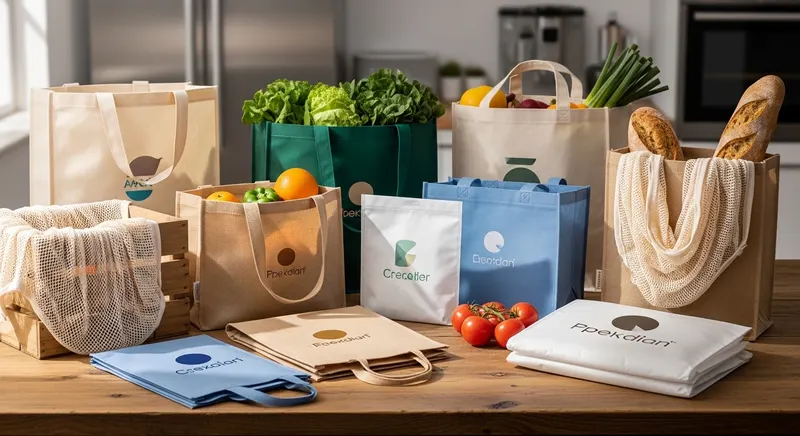
Promotional grocery bags are one of the most practical, high-visibility branded merchandise items available to Australian businesses today. Unlike a pen that gets lost in a drawer or a stress ball that ends up forgotten on a desk, a branded grocery bag gets taken out into the world — to supermarkets, farmers markets, school pick-ups, and weekend errands — putting your logo in front of hundreds of people every single week. For organisations across Sydney, Melbourne, Brisbane, Adelaide, and beyond, they represent one of the smartest investments in brand awareness you can make. Whether you’re a local council encouraging sustainable shopping habits, a real estate agency building community presence, or a health brand wanting to stay top of mind, promotional grocery bags tick every box.
This guide covers everything you need to know before placing your order — from materials and decoration methods to MOQs, budgeting, and how to get the most from your branded bags.
Why Promotional Grocery Bags Are a Smart Investment
When you think about cost-per-impression, few promotional products come close to a well-made grocery bag. Research consistently shows that reusable bags generate thousands of impressions over their lifetime. A branded bag used three times a week at the local shops in Perth or the Gold Coast is effectively a walking billboard for your organisation, reaching a highly diverse audience at zero ongoing cost.
Beyond brand visibility, there’s a compelling environmental angle. Australia’s plastic bag bans — now in force across every state and territory — have made reusable bags a genuine necessity for shoppers, not just a novelty. When your branded grocery bag is genuinely useful, it doesn’t get thrown in a cupboard. It gets used, repeatedly, for months or even years.
This is why promotional grocery bags are particularly popular with:
- Supermarkets and grocery retailers looking to reinforce brand loyalty
- Local councils and government bodies promoting sustainability initiatives
- Corporate businesses using them as conference or event giveaways
- Schools and parent associations fundraising or welcome packs
- Healthcare organisations in patient care or community outreach programmes
For a deeper look at how sustainable merchandise can elevate your brand’s values, explore our guide to sustainable promotional items — it’s a great companion read to this article.
Choosing the Right Material for Your Promotional Grocery Bags
Not all grocery bags are created equal. The material you choose will significantly affect cost, durability, print quality, and how your brand is perceived. Here’s a breakdown of the most common options available to Australian buyers.
Non-Woven Polypropylene (PP)
This is the most budget-friendly option and the most commonly seen promotional grocery bag in the market. Non-woven PP bags are lightweight, water-resistant, and available in a wide range of colours. They’re ideal for high-volume orders — think trade shows, conference giveaways, or large community events. Print quality using screen printing or heat transfer is generally solid, though the texture means photographic-quality prints aren’t achievable.
Typical MOQ: 100–500 units Typical price range: $1.50–$4.00 per unit at volume
Cotton Canvas
For organisations wanting to project quality and longevity, cotton canvas bags are a premium choice. They’re heavier, more durable, and feel genuinely premium in the hand. Cotton canvas takes screen printing beautifully, delivering sharp, vivid logos — particularly for one and two-colour designs. They’re popular with boutique brands, health food companies, and organisations in the eco and wellness space.
Typical MOQ: 50–100 units Typical price range: $5.00–$12.00 per unit depending on weight and quality
Jute and Hessian
Jute bags have a natural, earthy aesthetic that resonates strongly with organic brands, farmers markets, health food retailers, and environmental organisations. They’re biodegradable, sturdy, and feel premium without the price tag of heavy cotton. The woven texture creates a distinctive look that stands out from the crowd of standard bags.
Recycled and Sustainable Materials
Increasingly popular in 2026, bags made from recycled PET (from plastic bottles), organic cotton, or other certified sustainable materials are an excellent fit for organisations where environmental responsibility is a core value. These options pair perfectly with other eco-conscious merchandise — if you’re building a sustainability-themed gift pack, check out our article on recycled plastic sunglasses for beach cleanup events for another great product that fits the brief.
Decoration Methods: Printing Your Logo on Promotional Grocery Bags
Getting your artwork right is critical. The decoration method you choose will depend on your budget, bag material, design complexity, and the print quality you need.
Screen Printing
Screen printing is the most popular method for promotional grocery bags and offers excellent results on both non-woven PP and cotton canvas. It’s cost-effective at scale, delivers vibrant spot colours, and holds up to repeated washing and use. If your logo uses one to four solid colours, screen printing is almost always the best choice for volume orders.
Before finalising your order, it’s worth understanding screen printing setup costs for small business merchandise — setup fees apply per colour, and understanding this upfront helps avoid budget surprises.
Heat Transfer and Sublimation
For bags with complex, multi-colour designs or photographic elements, heat transfer and sublimation can achieve results that screen printing cannot. Sublimation is typically only suitable for polyester-based materials, so it’s more common on non-woven PP bags than on cotton or jute.
Embroidery
Embroidery adds a premium, tactile quality to a bag that genuinely elevates the product. It’s best suited to heavier cotton canvas bags and works particularly well for logos with bold, simple designs. Embroidery is more expensive per unit and has higher setup costs, but the result looks and feels exceptional — ideal for corporate gifting or premium brand positioning.
How to Order Promotional Grocery Bags: Key Considerations
Define Your Purpose First
Before you request a quote, be clear on what the bags are for. A Melbourne council distributing bags at a sustainability fair has different requirements to a Brisbane law firm including bags in a client onboarding pack. Purpose shapes everything — bag size, material, design, and quantity.
Get Your Artwork Ready
Most suppliers will require print-ready artwork files — typically vector files (AI or EPS) for screen printing, or high-resolution PDFs. If your artwork isn’t ready, allow extra lead time for design work. Ensure your brand colours are specified in Pantone (PMS) references if colour accuracy matters to your organisation.
Plan Your Timeline
Standard production for promotional grocery bags in Australia is typically 10–15 business days after artwork approval. For large orders or custom bags, allow up to three to four weeks. If you’re working to a tight event deadline, discuss rushed turnaround options early — just as organisations in Newcastle need to explore same-day promotional product printing in Newcastle, it pays to know your options before you’re in a panic.
Request a Pre-Production Sample
For any substantial order, always request a physical sample or a digital proof before approving full production. This allows you to verify print quality, colour accuracy, stitching, bag dimensions, and handle durability. Samples typically cost $30–$80 but can save you from an expensive mistake on a large run.
Pairing Promotional Grocery Bags with Complementary Products
One of the best strategies for maximising the impact of a promotional campaign is bundling complementary products together. Grocery bags work beautifully as the centrepiece of a branded gift pack or event giveaway set.
Consider pairing your bags with:
- Branded stationery — a quality spiral notebook tucked inside a branded bag creates a memorable and practical gift
- Reusable drinkware — branded keep cups or water bottles complement the sustainability message
- Lunch bags — for workplace wellness campaigns, pair grocery bags with stylish lunch bags for work for a cohesive, practical set
- Apparel — a branded tote paired with a custom t-shirt makes for an impressive welcome pack at conferences or community events
- Caps — if you’re outfitting an events team or volunteers, a trucker cap alongside a branded bag creates a consistent branded look
For organisations looking to build a comprehensive branded merchandise range, our wholesale branded bags guide covers bulk ordering strategies across multiple bag styles, including satchel bags for more formal settings.
Budget Planning for Promotional Grocery Bags
One of the most common questions buyers ask is how to stretch a merchandise budget without compromising on quality. Here are some practical tips:
Order in bulk. Price per unit drops significantly as quantities increase. If you anticipate needing bags across multiple events or campaigns throughout the year, ordering a larger batch upfront is almost always more cost-effective than placing multiple smaller orders.
Simplify your design. A one or two-colour screen print will always be more affordable than a full-colour process print. Many iconic brand logos look brilliant in a single colour on a contrasting bag — don’t feel you need to use every element of your brand style guide.
Choose the right material for the context. If you’re doing a high-volume community giveaway, non-woven PP is practical and cost-effective. Reserve premium cotton canvas for client gifts or premium brand touchpoints where the quality will be noticed and appreciated.
Compare total cost, not just unit price. A cheaper bag that degrades quickly and gets discarded after one or two uses delivers far less value than a better-quality bag that’s used weekly for two years. Factor longevity into your ROI calculation.
For organisations on the Sunshine Coast, our guide to Sunshine Coast branded merchandise for local businesses also has useful context about sourcing and budgeting locally.
Conclusion: Key Takeaways for Buying Promotional Grocery Bags
Promotional grocery bags remain one of the highest-performing branded merchandise options available to Australian businesses, organisations, and event planners. They’re practical, highly visible, genuinely useful, and align perfectly with the growing community expectation that brands take sustainability seriously.
Before you place your next order, here are the five key things to remember:
- Material matters — match the bag material to your audience, budget, and brand positioning; cotton canvas signals premium quality, non-woven PP suits high-volume giveaways
- Decoration method affects both quality and cost — screen printing is the go-to for most orders, but embroidery or heat transfer may better suit specific design or material combinations
- Plan your timeline carefully — allow at least 10–15 business days after artwork approval for standard orders, and longer for large or custom runs
- Bundle strategically — pairing promotional grocery bags with complementary branded items creates a more memorable, impactful brand experience
- Calculate ROI over the lifetime of the bag — a quality bag used regularly for one to two years delivers exceptional cost-per-impression compared to almost any other promotional format
Done well, promotional grocery bags don’t just carry groceries — they carry your brand into communities, workplaces, schools, and homes across Australia, day after day.