
Business Cards Printing in Australia: The Complete Guide for Smart Organisations
Everything Australian businesses need to know about business cards printing — paper stocks, finishes, MOQs, costs, and how to order like a pro.

Written by
Freya Dutta
Stationery & Office
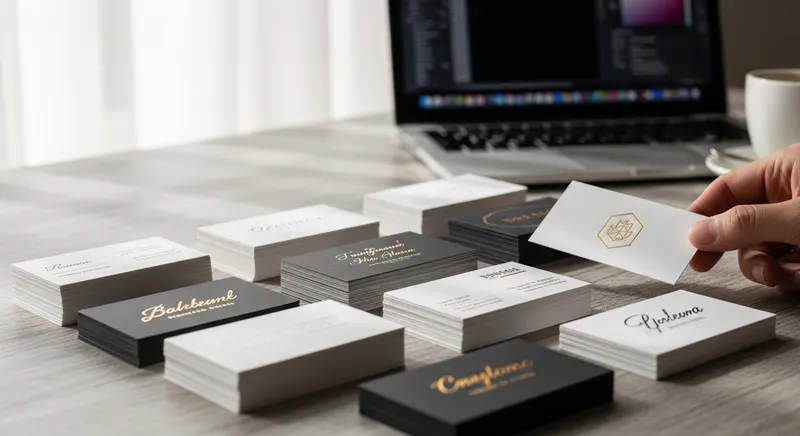
First impressions matter enormously in business, and few things make a more immediate, tangible impact than a well-designed, professionally printed business card. Despite the rise of digital communication, business cards remain one of the most effective and affordable branding tools available to Australian organisations — from sole traders in Hobart to large corporations in Sydney’s CBD. But navigating the world of business cards printing can feel overwhelming if you’re new to it. Which paper stock is right? What finish should you choose? How many do you actually need to order? This guide breaks everything down so you can order with confidence and get results that genuinely represent your brand.
Why Business Cards Still Matter in 2026
It’s tempting to assume that in an age of LinkedIn profiles and digital wallets, the humble business card has lost its relevance. But the reality tells a different story. Research consistently shows that a physical business card creates a stronger memory impression than a digital exchange. When you hand someone a card at a Melbourne networking event or a Brisbane industry conference, you’re giving them something tangible — something that sits on their desk, gets pinned to a board, or tucked into a wallet as a physical reminder of your conversation.
For Australian businesses, business cards also signal professionalism and preparedness. Showing up to a trade show in Perth or a client meeting in Adelaide without cards can leave a poor impression, particularly when dealing with more traditional industries like finance, law, real estate, and healthcare. Even for event planners coordinating conferences on the Gold Coast or Sunshine Coast, having branded cards ready to distribute to vendors and stakeholders is simply good practice.
Beyond networking, business cards serve a functional purpose. They carry essential contact information — phone number, email, website, and social handles — in a format that doesn’t require a charged battery or an internet connection to access.
Understanding Business Cards Printing: Paper Stocks and Specifications
Before you jump into the design phase, it pays to understand the core printing specifications that will affect both the look and the cost of your cards.
Paper Stock Weight
The weight of your paper stock is measured in GSM (grams per square metre). Standard office paper sits around 80–90 GSM, but business cards typically start at 300 GSM and go up from there. Here’s a quick breakdown:
- 300–350 GSM: The most common range for standard business cards. Sturdy, professional, and cost-effective.
- 400 GSM: A noticeably thicker card that feels premium in hand. Popular with law firms, architects, and financial advisers.
- 600–700 GSM (double-thick): Often created by laminating two card layers together. These feel substantial and luxurious — ideal for premium brand positioning.
For most Australian small-to-medium businesses, 350 GSM with a quality finish strikes the right balance between professionalism and budget.
Standard Sizing
The standard Australian business card size is 90mm x 55mm — the same as a credit card. This fits neatly into cardholders and wallets, which is exactly where you want your card to end up. You can also explore square cards (55mm x 55mm) or mini cards for a distinctive look, though these work best for creative industries where standing out visually is part of the brand message.
Bleed and Safe Zones
When preparing artwork for business cards printing, your printer will typically require a 3mm bleed on all sides and a 3mm safe zone inside the trim edge. This prevents important text or logos from being accidentally cut off during the trimming process. Most reputable printers will provide a template or artwork guidelines when you place your order.
Finishing Options That Elevate Your Cards
The finish you choose can dramatically change how your business cards look and feel. This is where you can really make your brand shine.
Gloss Lamination
A gloss laminate gives cards a shiny, reflective surface that makes colours pop — especially vibrant blues, reds, and greens. It also adds durability, protecting against moisture and general handling wear. Gloss is a popular choice for real estate agents and sales professionals who want bold, eye-catching cards.
Matte Lamination
Matte lamination produces a smooth, non-reflective finish that feels sophisticated and modern. It’s particularly effective for cards with dark or pastel colour palettes and gives a premium tactile feel. Matte is widely favoured by designers, architects, and consultants.
Spot UV
Spot UV involves applying a high-gloss UV coating to specific areas of the card — typically a logo or key design element — while leaving the rest matte. The contrast creates a striking visual effect that’s hard to replicate digitally. It’s a fantastic option when you want to make a serious impression without going to embossed or foiled cards.
Foil Stamping
Gold, silver, rose gold, or holographic foil stamped onto a business card looks genuinely impressive. Foil stamping is particularly popular in the legal, financial, and luxury hospitality sectors. Keep in mind that foil stamping typically increases both cost and turnaround time, so plan accordingly.
Soft Touch (Velvet) Lamination
Soft touch lamination creates a velvety, almost suede-like texture that people genuinely cannot stop touching. It’s a premium finish that photographs beautifully and feels unlike anything else. Increasingly popular in 2026 for brands that want their materials to feel as good as they look.
Business Cards Printing: Costs, MOQs, and Turnaround Times
Understanding the economics of business cards printing helps you plan effectively and avoid budget blowouts.
Minimum Order Quantities
Most Australian commercial printers operate with minimum order quantities (MOQs) starting at 50–100 cards. For a small business or sole trader, ordering 250 cards is often the sweet spot — enough to last for 12–18 months without overspending. Corporate organisations ordering for multiple staff members commonly place bulk orders of 1,000+ cards to benefit from tiered pricing.
Typical Costs
Business cards printing costs vary significantly depending on paper weight, finish, and quantity. Here’s a general guide for standard single-sided cards in Australia:
- 250 cards, 350 GSM matte: $40–$80
- 500 cards, 350 GSM gloss: $60–$100
- 1,000 cards, 400 GSM with spot UV: $150–$250
- Premium finishes (foil, soft touch, embossing): Add $50–$150+ depending on complexity
Always factor in setup fees — some printers charge a one-time artwork setup fee, particularly for specialty finishes.
Turnaround Times
Standard business cards printing typically takes 3–5 business days from proof approval. Premium finishes like foil stamping or soft touch lamination can take 7–10 business days. If you’re in a rush, some providers offer express turnaround. If you’re in New South Wales, our guide to same-day promotional product printing in Newcastle has useful insights into expedited print services in the region.
Artwork Preparation and Colour Matching
Getting your artwork right before you send it to print is critical. Most professional printers accept files in PDF, EPS, or AI format. Always supply files in CMYK colour mode (not RGB), as this is what commercial printing presses use. If your brand has specific PMS (Pantone Matching System) colours, ask your printer whether they can accommodate PMS colour matching — this ensures your brand colours are accurate and consistent across all printed materials.
If you’re sourcing business cards as part of a broader branded stationery package — including spiral notebooks, branded pens, and other office essentials — it’s worth working with a supplier who can coordinate colour matching across all items simultaneously.
Pairing Business Cards with a Broader Branded Stationery Suite
Business cards rarely exist in isolation. Most Australian organisations develop a complete branded stationery suite that presents a cohesive, professional image at every touchpoint. Common items to consider alongside business cards include:
- Letterheads and compliment slips for formal correspondence
- Branded envelopes for client-facing mail
- Notepads and notebooks — our post on spiral notebooks covers what to look for when ordering branded versions
- Folders and satchel bags for client presentations and proposals
- Lanyards and name badges for events and conferences
For organisations with a sustainability focus — common among councils, universities, and not-for-profits — it’s worth exploring sustainable promotional items that can complement your stationery suite with eco-conscious materials like recycled stock or FSC-certified paper.
Tips for Ordering Business Cards as an Organisation
Whether you’re a small business owner in Canberra or an events coordinator managing a team in Darwin, these practical tips will help your business cards printing project run smoothly.
Consolidate orders across your team. Rather than ordering 250 cards each for 10 staff members separately, combine into a single bulk order of 2,500 cards. You’ll pay significantly less per unit and simplify the reorder process.
Proofread carefully before approving. Typos on printed business cards are expensive mistakes. Double-check phone numbers, email addresses, and websites. Ask a colleague to review as well — a second set of eyes catches errors you’ve become blind to.
Consider a digital proof and a physical sample. For large orders or premium finishes, request a physical sample before committing to the full run. This is especially important if you’re specifying exact PMS colours or spot UV placement.
Plan for turnover. If your business has relatively high staff turnover or roles that change frequently, consider ordering smaller quantities per person rather than large bulk runs — even if the per-unit cost is slightly higher.
Store cards properly. Business cards stored in humid environments can warp or stick together. Store them flat in a cool, dry place, preferably in their original packaging until distributed.
For organisations managing a full suite of branded merchandise alongside stationery — from wholesale branded bags and tech jackets to event giveaways — it’s worth reading our broader guide on sunshine coast branded merchandise for local businesses to understand how to coordinate large projects effectively.
Common Mistakes to Avoid
Even experienced buyers make mistakes when ordering business cards. Here are the most common pitfalls:
- Ordering in RGB colour mode: Always convert to CMYK before submitting artwork
- Forgetting bleed: Artwork without bleed can result in white edges on your finished cards
- Using low-resolution images: Always use 300 DPI images for print; screen images (72 DPI) will look blurry when printed
- Choosing a font size that’s too small: Text below 7pt can become difficult to read once printed
- Not checking the reverse side carefully: If ordering double-sided cards, review both sides equally in your proof
Understanding print production basics also helps when managing other merchandise projects — our post on screen printing setup costs for small business merchandise explains the broader economics of commercial print and decoration work.
Conclusion: Key Takeaways for Business Cards Printing in Australia
Business cards printing remains one of the smartest, most cost-effective investments an Australian business or organisation can make in its brand. Done well, a quality business card communicates professionalism, reinforces your visual identity, and gives people a lasting, tactile connection to your brand long after the initial meeting.
Here are the key takeaways to carry into your next order:
- Choose a paper weight of 350 GSM or above for a professional feel that stands up to everyday handling
- Match your finish to your brand personality — gloss for bold and vibrant, matte for sophisticated and modern, soft touch for premium and distinctive
- Prepare artwork in CMYK at 300 DPI with 3mm bleed to avoid print quality issues
- Order in bulk where possible to take advantage of tiered pricing and reduce the cost per card
- Proofread twice, print once — errors on printed cards are costly and entirely avoidable
- Integrate your cards into a broader stationery suite for a cohesive, professional brand presence across all communications
Whether you’re refreshing cards for an established team or ordering for the first time as a new business, taking the time to understand your options puts you in the best possible position to get results you’re genuinely proud to hand over.